%20--%3e%3cpath%20d='M17.73,0v114.51H0V0h17.73Z'/%3e%3cpath%20d='M51.88,114.5h-16.47V26.14h14.33l.72,7.34c4.84-5.91,11.46-8.95,19.52-8.95,14.68,0,22.92,10.74,22.92,30.98v59h-16.47v-58.64c0-11.82-3.94-16.65-11.46-16.65-6.09,0-10.39,3.04-13.07,6.98v68.3h-.02Z'/%3e%3cpath%20d='M124.94,114.5h-16.47V26.14h14.33l.72,7.34c4.84-5.91,11.46-8.95,19.52-8.95,14.68,0,22.92,10.74,22.92,30.98v59h-16.47v-58.64c0-11.82-3.94-16.65-11.46-16.65-6.09,0-10.39,3.04-13.07,6.98v68.3h-.02Z'/%3e%3cpath%20d='M236.85,86.39c0,17.01-9.85,29.72-28.83,29.72s-28.83-12.53-28.83-29.72v-31.78c0-17.19,9.67-30.08,28.83-30.08s28.83,12.71,28.83,30.08v31.78ZM195.49,85.67c0,11.28,4.12,16.83,12.53,16.83s12.36-5.55,12.36-16.83v-30.53c0-11.28-3.94-16.83-12.36-16.83s-12.53,5.55-12.53,16.83v30.53Z'/%3e%3cpath%20d='M250.1,46.02c4.48-12.71,12.89-21.67,26.5-21.67,17.01,0,24.17,11.64,24.17,28.47v44.67c0,3.94,1.79,6.27,5.37,6.27h0l4.06,10.01c-3.09,1.3-7.1,1.81-9.79,1.81-6.8,0-10.92-3.04-13.43-7.16-4.83,5.19-10.92,7.52-18.08,7.52-12.89,0-21.13-9.85-21.13-24.89,0-16.47,8.59-29.19,32.05-29.19h4.48v-9.22c0-10.56-3.22-14.5-9.85-14.5-5.73,0-10.21,4.12-13.25,12.89l-11.1-5.01ZM284.3,97.13v-23.1h-4.48c-12,0-16.29,5.73-16.29,15.58,0,10.56,3.76,13.97,9.31,13.97,5.2,0,8.6-2.15,11.46-6.45Z'/%3e%3cpath%20d='M356.82,50.85c-2.15-8.95-6.44-12.35-12.18-12.35-7.7,0-12.36,4.83-12.36,16.65v30.35c0,11.82,4.48,16.83,12.36,16.83,6.09,0,10.03-3.58,12.36-12.89l12.36,3.94c-3.58,14.32-12.36,22.74-26.14,22.74-18.26,0-27.22-13.61-27.22-29.9v-31.6c0-16.83,9.13-30.08,27.22-30.08,12.89,0,22.2,8.24,25.78,22.2l-12.18,4.11Z'/%3e%3cpath%20d='M416.63,43.15h-17.01v48.61c0,7.34,3.4,10.92,9.13,10.92,2.33,0,3.38-.11,4.47-.54l3.76,9.85c-3.76,2.33-8.42,3.94-14.15,3.94-13.61,0-19.7-8.41-19.7-24.71v-47.18l-9.31-2.33v-11.63l10.21-.72.57-14.93,15.01-4.77v20.05h17.01v13.44h0Z'/%3e%3cpath%20d='M446.53,26.14v88.36h-16.47V26.14h16.47ZM445.64,0v17.55h-14.86V0h14.86Z'/%3e%3cpath%20d='M500.79,114.5h-18.8l-24.35-88.36h18.08l15.76,72.07,15.94-72.07h18.08l-24.71,88.36Z'/%3e%3cpath%20d='M548.06,73.41v12.08c0,11.28,4.66,16.83,13.25,16.83,6.8,0,10.56-3.76,13.43-14.15l12.36,3.94c-3.76,16.29-12.36,23.99-27.4,23.99-18.26,0-27.93-12.89-27.93-30.08v-31.6c0-16.83,9.49-29.9,27.93-29.9s27.04,13.25,27.04,30.62v18.26h-38.68ZM548.06,62.49h23.82v-8.77c0-10.74-4.12-15.76-11.82-15.76-8.24,0-12,5.19-12,15.76v8.77Z'/%3e%3cpath%20d='M614.75,107.12c0,4.4-3.69,8.99-8.77,8.99s-8.77-4.59-8.77-8.99v-1.23c0-4.4,3.62-8.92,8.77-8.92s8.77,4.52,8.77,8.92v1.23ZM599,107.12c0,3.88,2.87,7.2,6.9,7.2s7.13-3.32,7.13-7.2v-1.23c0-3.95-2.95-7.28-7.13-7.28s-6.9,3.32-6.9,7.28v1.23ZM605.91,107.94h-1.34v3.77h-2.31v-10.86h4.03c2.69,0,3.95,1.34,3.95,3.51,0,1.64-.75,2.84-2.16,3.21l2.61,4.14h-2.46l-2.32-3.77ZM604.56,106.3h1.64c1.27,0,1.64-.67,1.64-1.87s-.37-1.72-1.64-1.72h-1.64v3.59Z'/%3e%3c/svg%3e)
Introducing Innoactive Halo: An Airgapped AI Agent for Apple Vision Pro Design Reviews
The best decisions in a design review are the ones nobody wrote down
A Vision Pro design review is the most information-dense hour your studio runs. A full-size vehicle hangs in the room at 1:1, the right people are around it, and in the back-and-forth they settle dozens of things — this trim, not that one; raise the beltline two millimetres; the rear bumper is wrong, try the matte variant. Then everyone takes their headset off, and most of that evaporates. Someone scribbles a few notes from memory. The teammate who couldn't fly in gets a secondhand summary. The engineer who has to execute the change wasn't in the room at all.
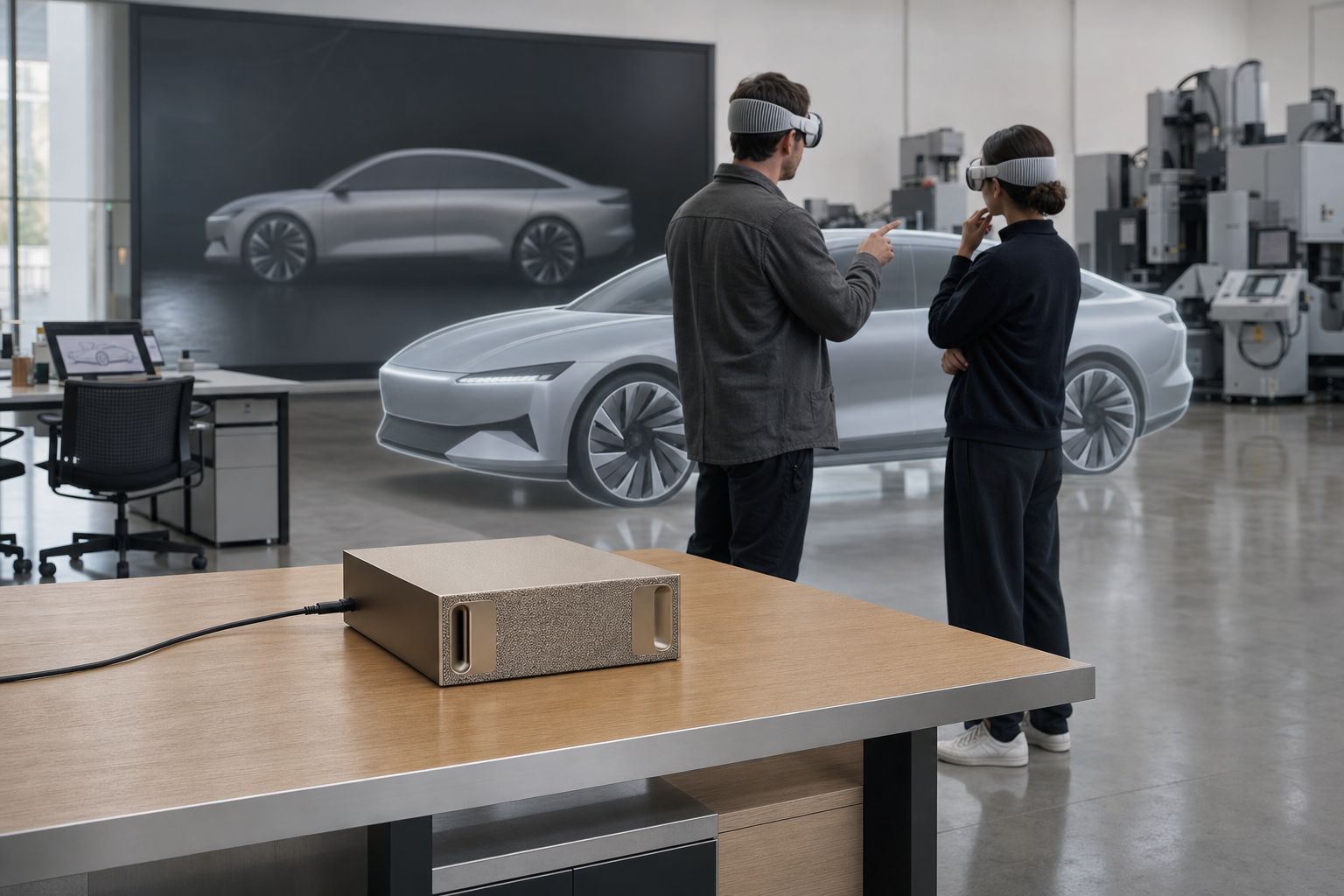
Today we're introducing Innoactive Halo — the part of the review that remembers. Halo is an on-device AI agent that sits in the room with you, listens to the conversation, watches the same scene you do through Apple Vision Pro, and writes the meeting down as it happens. When the team agrees on a change, Halo proposes the matching Autodesk® VRED command for a human to approve. When the session ends, it hands you a structured record of what was decided, by whom, and why — plus a replay anyone can scrub through later.
The catch with most tools that promise this is where the recording goes. Halo's answer: nowhere. It runs entirely on a single NVIDIA DGX Spark on your desk, airgapped by design, so the most sensitive hour of your design process never leaves the studio.
An AI that lives inside the review room
You start the session the way you already mirror a headset: from Control Center on Vision Pro, you pick the Spark from the screen-mirroring list. From that point the room view, your gaze, the audio of everyone present, and the spatial context of the scene all arrive at Halo. There is no chatbot to talk to and no second operator pulled back to a workstation — the agent stays quiet and listens while you keep designing.
Underneath, Halo runs the whole pipeline locally on the Spark: speech recognition, decision extraction, and scene reasoning across a stack of models sized to fit a single workstation-class device. It turns the meeting into a structured log — the decision, the rationale, who owns it, when it's due, the part of the car it touches, and a snapshot of what was on screen when it locked in.
When a decision implies a change to the scene — "hide the rear bumper", "switch to the matte variant", "try the carbon trim" — Halo proposes the matching VRED command as a queued action in the overlay. Nothing changes in the model until a human taps approve, and the v1 command set is deliberately narrow: part visibility, variants, materials, and saved viewpoints. The agent does the bookkeeping; the designers keep control of every edit.
Replay for everyone who wasn't in the room
The record only matters if people can use it afterwards. When a review ends, Halo writes a decision log, a synced replay, scene snapshots, and a PDF summary — all to encrypted storage on the device and served on the local network. A teammate who joined late, a stakeholder who couldn't travel, or an engineer who needs to execute a decision opens the local replay viewer, jumps to the moment they care about, and sees exactly what was said and what was on screen. The hallway summary stops being the system of record.
Built for studios that can't send their IP to the cloud
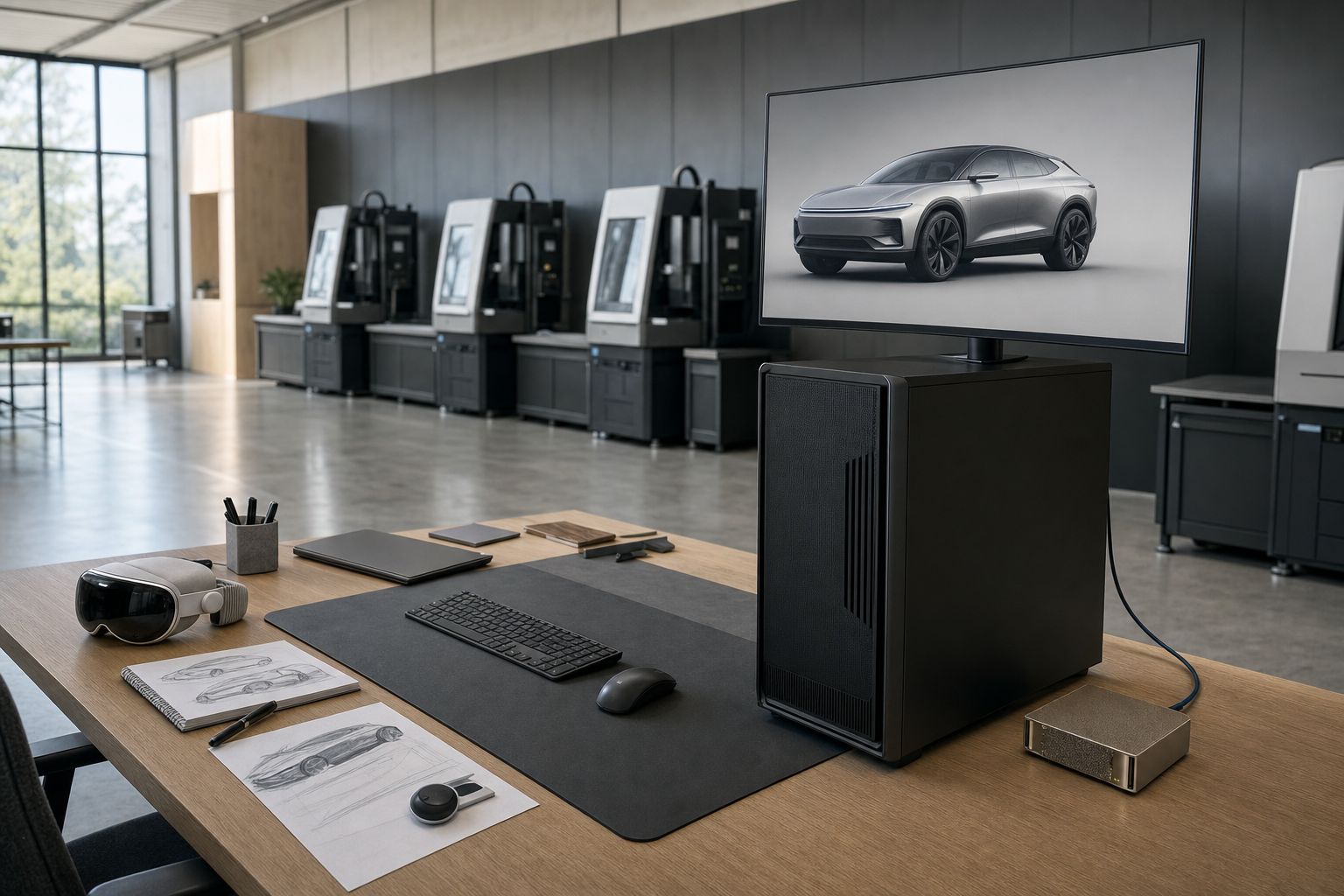
For an automotive studio, an unreleased vehicle is the IP. That's why Halo is on-prem and airgapped rather than another cloud service. Every model runs locally on the DGX Spark; the appliance image ships with its egress firewall closed and the models pre-baked in, so Halo never reaches the internet during a session. Audio, video, transcripts, decisions, and snapshots are stored encrypted on the device. The Spark talks to your VRED workstation over a single Ethernet cable and to nothing else — a deployment posture you can hand to IT and security without a cloud-vendor questionnaire attached.
It also fits the way studios already work rather than asking them to change it. Halo reads the Autodesk® VRED scene graph your designers use in production, and it complements Innoactive Spatial, which streams VRED to Apple Vision Pro in the first place. Spatial puts the review in the headset; Halo makes sure the review's conclusions survive it.
Debuted at the Autodesk Automotive Innovation Forum 2026
Halo had its first public showing on the Lenovo booth at the Autodesk Automotive Innovation Forum 2026, alongside the NVIDIA and KIA demonstration of XR AI inside an Autodesk® VRED review of the KIA Metavision. It's the natural companion to that work: where the on-booth assistant configures the scene, Halo captures the decisions that come out of working with it.
Halo is available now in early access as a per-Spark commercial license, with pilot pricing for early customers. If your design reviews still depend on someone reconstructing the decisions from memory afterwards, Halo runs in the room and writes the record for you — on hardware that never leaves your studio.
Request early access or explore Innoactive Halo to see how it fits your review workflow.
More from Innoactive
Anchoring the Digital Car to the Real World: How Innoactive Spatial Aligns to Your Seating Buck — and What WWDC Changes
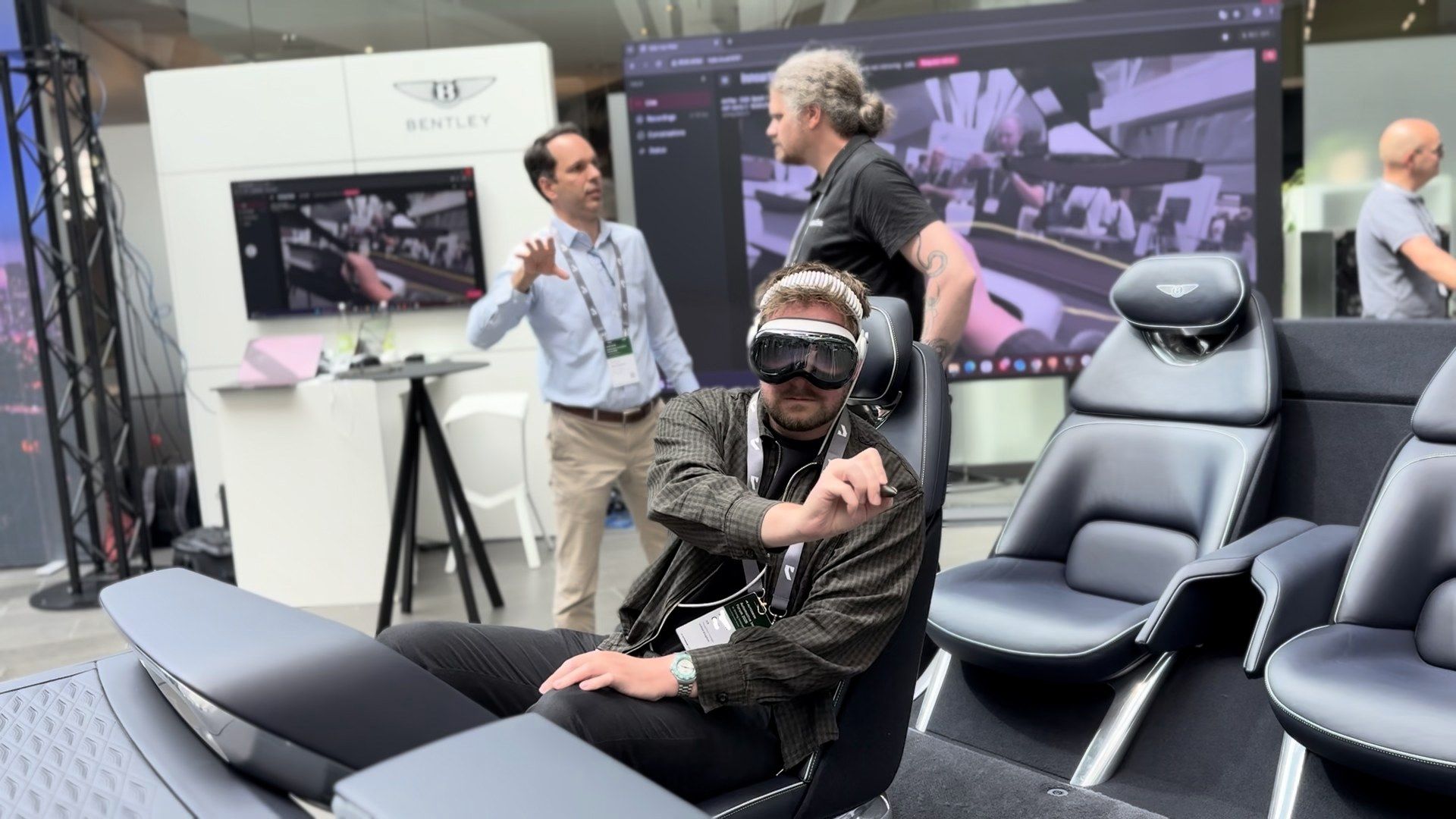
A deep dive into the spatial anchoring methods behind automotive design review in Innoactive Spatial, how we lock a full-scale digital vehicle onto a physical seating buck today, and how Apple's WWDC announcements on active trackers and extended object tracking will make it even more precise and effortless.

Innoactive Brings XR AI and Shared Spatial Experiences to the Autodesk Automotive Innovation Forum 2026
At AIF 2026, Innoactive teams up with NVIDIA, Lenovo, KIA, Bentley Motors, Granstudio, Renault, and Autodesk to show how Autodesk® VRED design reviews on Apple Vision Pro evolve — from AI-assisted variant configuration on the KIA Metavision, to multi-user passthrough reviews around a Bentley seating buck, to auto-aligned Renault Twingo reviews on Granstudio's DIGIPHY dynamic seating buck.
Innoactive Showcases Spatial Streaming to Apple Vision Pro Built on NVIDIA Omniverse at NVIDIA GTC 2026
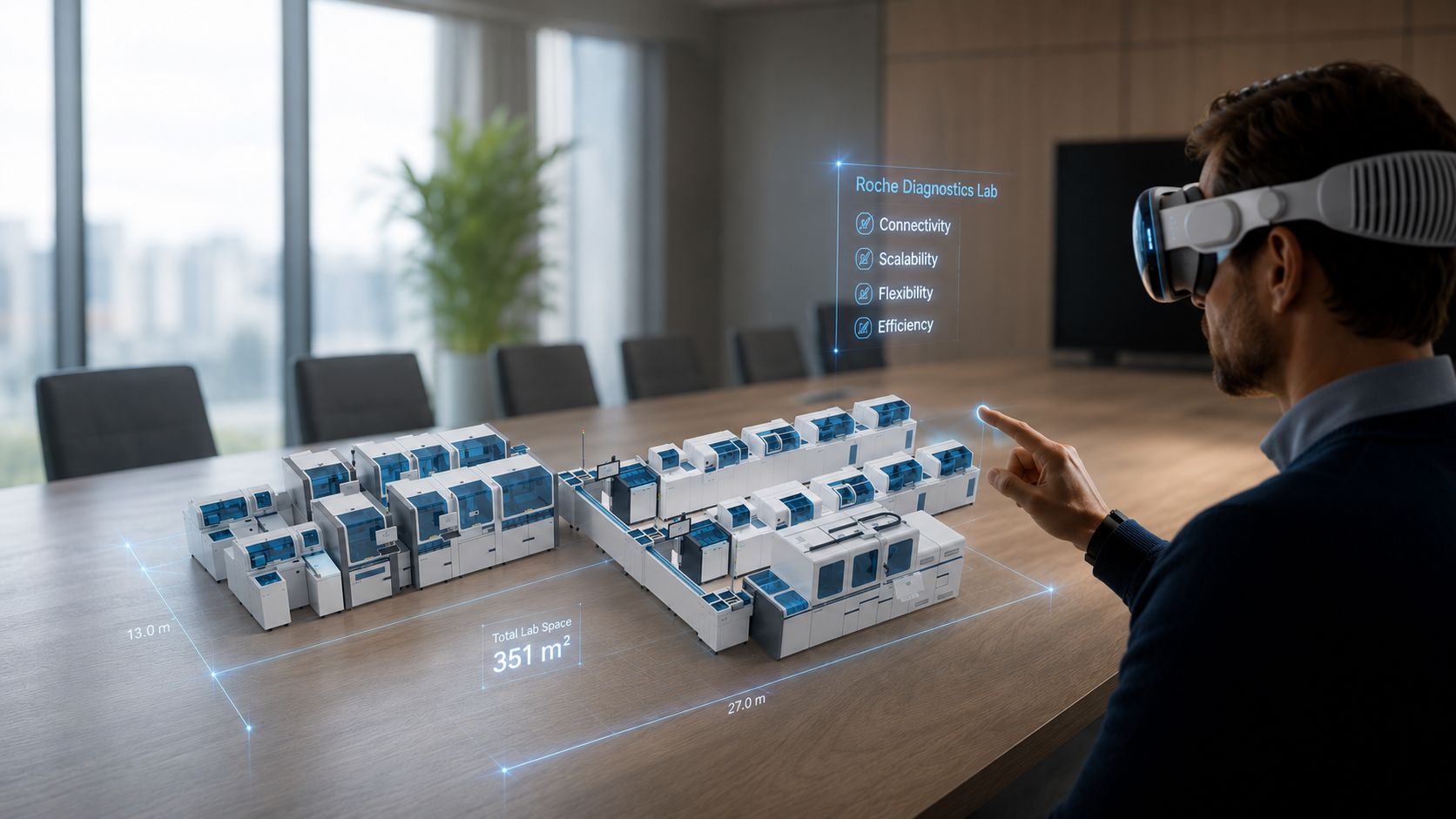
Explore how Innoactive delivers OpenUSD applications to Apple Vision Pro using NVIDIA Omniverse and CloudXR at GTC 2026. Discover enterprise spatial streaming across automotive, healthcare, and digital twin use cases.